Project Reroute Supports Justice-impacted Students at Nashville State
A new program at Nashville State is offering a second chance for justice-impacted students.
Project Reroute is showcasing the transformative power of education and offers hope to those who, through life circumstances or bad decisions, felt they had nowhere else to go in life. Proving that a past mistake does not define, but through learning, community, and persistence, every person has the opportunity for a brighter future.
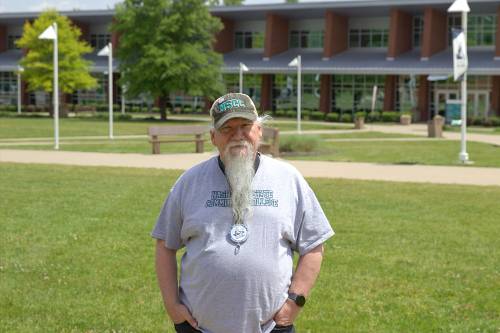 The program is headed up by Lawrence Morris, a man who found his calling helping the
formerly incarcerated adjust to life outside of jail or prison.
The program is headed up by Lawrence Morris, a man who found his calling helping the
formerly incarcerated adjust to life outside of jail or prison.
After his release from a California prison, Morris attended Palomar College, where he participated in a similar program. There, he earned two associate degrees before graduating from Cal State San Marcos with a bachelor’s and a master’s degree.
His life experience has allowed him to see from the inside the barriers that formerly incarcerated and justice-impacted students face, putting him in the position to help guide those he seeks to help.
“We want to create a sense of community,” Morris said. “If you look at research, students who do better are those who have a sense of connection and community on campus.”
“That’s one of the things we’re trying to build.”
Though in its early stages, Morris said they are working with 26 justice-impacted students and helping them navigate their college careers. One of the biggest areas students struggle with is communication.
“What I keep finding over and over again are issues with communication. Not knowing who to talk to about what,” Morris said.
“That’s one of the things I’m going to be able to do and help these students with. Every student’s life is a little bit different; every student’s barriers are a little bit different.”
In addition to nuts-and-bolts issues, Morris says one of the biggest challenges justice-impacted students face is finding a new place in the world.
“The two hardest things that I faced was the technology curve and the second was imposter syndrome. Feeling like I didn’t belong,” Morris said.
“With Project Reroute, we’ve been able to focus on making connections and making sure that students are aware of programs that exist, and we take them and introduce them to the people they need to know."
"I have the time to be able to talk to students and examine all those goals,” Morris said.
As they continue to grow, Morris says they are building a central location on the White Bridge campus where students can gather.
Deemed the “Nest,” it will serve as a physical location to build out their community to help students move through Nashville State and onto a career.
“We can bring more people together and create a better community of support and eventually stop recidivism,” Morris said.
In addition to building out their central “Nest,” Morris said he wants to raise awareness of the program across the college so Nashville State can best help these students.
We want to “have conversations that say hey, this is Project Reroute, this is what we do,” Morris said. “Let these students know we have a place for them. A place where they can grow. A place where they can feel welcome.”
“The work we are doing here, I believe, is important not just for the students but for our community at large,” Morris said. “If we can build a program that supports them both on the inside and the outside, recidivism will go down.”
“We can change the lives of our students. Slowly and steadily, we can have a positive ripple effect where we save lives.”